THE WORD AND THE SPIRIT
by Geoffrey W. Grogan*
As we have seen, the Bible is the Word of God because it is “breathed out” by the Holy Spirit and the same Spirit also works within us to enable us to respond positively to the Word, for our hearts need to be softened towards God. it is the new birth that effects this. We can see this clearly if we look at different aspects of the Christian life.
So, when we consider conversion, it is evident that there can be no salvation without a Savior, and salvation comes to us in practical terms when we know Christ in our inner being. This is not, however, a mystical experience but is mediated to us through biblical truth, whether this comes directly from the Scriptures or through preaching or reading or personal witness or in some other way.
We must not, however, give the impression that salvation is by the acceptance of a formula, which is anything but true. Personal salvation is by the Spirit of God working in the human heart but in connection with the hearing of the Word. “Faith comes from hearing the message, and the message is heard through the word of Christ” (Rom. 10:17). Christ the incarnate Word meets us in personal encounter through the written Word, and it is the Spirit of Truth, of Grace and of Christ who so works in our hearts through that Word. Here, then, objective truth and subjective experience meet, with the former being used by the Holy Spirit to create the latter.
The Word and the Spirit are also involved together in assurance. Paul says, “You also were included in Christ when you heard the word of truth, the gospel of your salvation. Having believed, you were marked in him with a seal, the promised Holy Spirit, who is a deposit guaranteeing our inheritance” (Eph. 1:13–14). Objective fact and inner assurance answer to each other. So, then, assurance is not mystically conveyed but comes by actual contact with the Scriptures themselves, in the reading and hearing of them or in some exposition of their truth.
Christian assurance embraces not only conviction of personal salvation, but carries with it also convictions about the Word through which salvation has come. In 2 Timothy 3:14, Timothy is told to continue in what he has learned and been assured of, and the learning was presumably, through the work of the Spirit, the cause of the assurance. He would have learned these things from Paul as an authoritative witness to God’s truth.
It is through the Word and the Spirit, too, that sanctification takes place. The new birth is the first movement in inward sanctification, and in both the initial crisis and the consequent process there is a communication of Christ, for this is the purpose of all the means of grace. It is sadly possible to get to know the Scriptures better without knowing Christ better, but the reverse is never true. An examination of Ephesians 5:18 and Colossians 3:16 shows that they have remarkably similar contexts. For this reason it is surely significant that at the contextual point where in Ephesians Paul says, “Be filled with the Spirit”, (Eph. 5:18), in Colossians he ays, “Let the word of Christ dwell in you richly” (Col. 3:16), in both cases employing a continuous tense. It looks, then, as though the work of the Word and of the Spirit are two sides of the same coin. The Spirit constantly uses the Word in conforming us to Christ. [boldface added]
The God who works within us through his Word and Spirit in conversion, assurance and sanctification, is also at work in our perseverance. We read the Word, taking heed of its encouragements and its warnings, and as a result the Spirit of God preserves us as Christians and enables us to persevere in Christian discipleship.
This practical stress on the Holy Spirit’s use of Scripture in every aspect of the Christian life was a major theme of the Puritans, as it was also of the early Methodists and the continental Pietists. This serves to remind us that, important as a high doctrine of Scripture and its verbal inspiration is, we should never forget that God gave the Bible as his means to his end, which is not simply orthodox thinking (which is not unimportant) but sanctified living.
In relation to all these divine activities the Spirit works through means that are objective and that are found in holy Scripture. Will this be true even of that great moment when Christians are glorified at the second advent? It seems so, because Paul tells the Thessalonians that “the Lord himself will come down from heaven, with a loud command, with the voice of the archangel and with the trumpet call of God” (1st Thess. 4:16), and also the “he who raised Christ from the dead will also give life to your mortal bodies through his Spirit, who lives in you” (Rom. 8:11). So from conversion to consummation the Word and the Spirit are effectively at work together.
Amen!
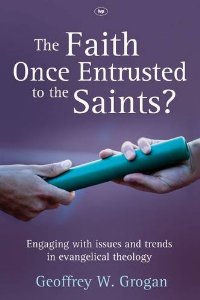
*This excerpt is from an excellent, well-written theological book, which I highly recommend: The Faith Once Entrusted to the Saints? Engaging with issues and trends in evangelical theology, by Geoffrey W. Grogan, Inter-Varsity Press, 2010; pages 189-190. ISBN: 978-1-84474-478-7


eads, “Is any word of God void of power?” God’s powerful word comes into our world of sin and death and promises salvation. Isaac will continue the covenant, and from him, in God’s time, will come the Messiah, who will save His people from their sins. When the Messiah comes, He will be born, not to a barren woman like Sarah, but to a virgin — an even greater manifestation of God’s omnipotence. So to Mary the angel echoes God’s promise to Abraham: “Nothing is impossible with God” (Luke 1:36).

 The Breadline