
In my devotions this past week, I’ve been reading in the OT, and in 1st Chronicles, where I’ve not read in a long time. I was captured by the vivid and significant story in chapter 21. It tells of David’s sinful census of the nation (how many men could raise a sword for him), then of the judgment of God for this prideful act — as an angel of death killed many, and held a sword over Jerusalem itself, until God cried out stop.
There follows a great expression of mercy and grace of the Lord to David and the people. It is THIS very story of the Bible which tells us how the OT Temple site was chosen [see 1 Chr. 22:1]. Of course it is the same place [Mt Moriah by tradition] where another OT character named Abraham once held a knife over his son, Isaac, until the Lord stopped him, and provided a substitute sacrifice. Marvelous connections to be made here! The study of God’s word is so rich.
Let me encourage you to read this part of your Bible this summer. Yes, the first several chapters of Chronicles are filled with lots of hard to pronounce names, but do not let those things keep you from the rest of the book.
Let me whet your appetite for this part of the Bible with the following, worthwhile introduction by a fine commentator (and let me know if you go on to read Chronicles!) pdb
Though the Chronicler has been my companion for several years, I have not ceased to be filled with admiration for the breadth of his vision and his extraordinary perception. His conviction that God’s message is also essentially a hopeful one justifies his work being described as ‘the good news according to the Chronicler’. I have been amazed too at the relevance of his work for the modern world, especially for Christians who form a minority in their society,
perhaps even suffering for their faith, and with little hope of seeing positive change in the political context in which they live; those who have lost hope of ever seeing for themselves the glorious times experienced by Christians of former generations; those who are concerned for the spiritual health of their nation and would like to discover what role Christians could have in being an influence for good; those who want to have a broad vision of God’s purposes for their lives and for the church; and those who want to understand what the Old Testament as a whole is about and why it is included in the Bible.
Maybe in the past you have been dissuaded from reading the books of Chronicles because of their length, or because they contain ancient history, or above all because of their lists of strange names, especially in the first nine chapters. None of these presents an insurmountable obstacle to enjoying Chronicles, however. Especially if you have never attempted to read Chronicles seriously before, may I suggest that you start at 1 Chronicles 10 and simply leave out the lists until you feel you are ready for them. it would be a shame to miss out on all that God has to say simply because of a problem about where to start.
The Chronicler’s concern is that his readers should experience genuine healing, and what he has to say on the subject goes far deeper than most contemporary discussion and teaching. It is my prayer that each of you will receive something of this healing and restoration, and that in doing so you will discover more of god’s own heart (cf: 2 Ch. 7:14,16).
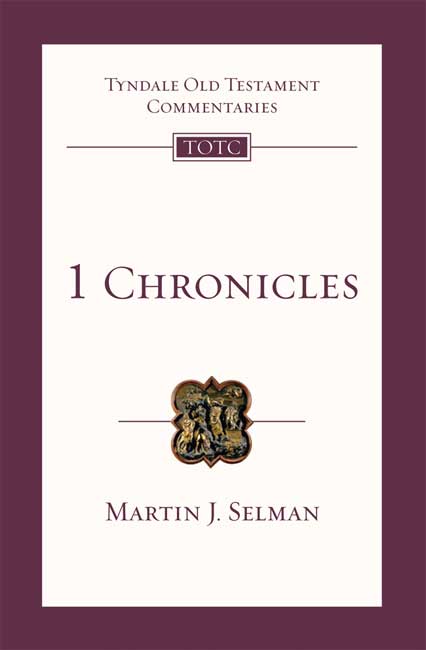
by Martin J. Sehman (TYNDALE OT CCOMMENTARY, 1st Chronicles, IVP, 1994).
[boldface added]
pdb
 The Breadline