Have you ever noticed how truly regal Jesus appears at the hour of His arrest? Consider the account from John, an eyewitness —
When Jesus had spoken these words, he went out with his disciples across the Kidron Valley, where there was a garden, which he and his disciples entered. 2 Now Judas, who betrayed him, also knew the place, for Jesus often met there with his disciples. 3 So Judas, having procured a band of soldiers and some officers from the chief priests and the Pharisees, went there with lanterns and torches and weapons. 4 Then Jesus, knowing all that would happen to him, came forward and said to them, “Whom do you seek?” 5 They answered him, “Jesus of Nazareth.” Jesus said to them, “I am he.” Judas, who betrayed him, was standing with them. 6 When Jesus said to them, “I am he,” they drew back and fell to the ground. 7 So he asked them again, “Whom do you seek?” And they said, “Jesus of Nazareth.” 8 Jesus answered, “I told you that I am he. So, if you seek me, let these men go.” — John 18 esv
At the recent Banner of Truth Conference, Dr Joel Beeke, a long-time pastor, and President of Puritan Reformed Theological Seminary in Michigan (and a friend of mine), spoke from John 18 of our Lord Jesus in the Garden of Gethsemane. We’re told that Jesus knew what would happen to Him (18:4), yet still entered the familiar place of prayer so that these events might unfold according to Scripture (18:9). It ought to amaze us to see here our 33 year old Savior directly in harm’s way yet acting with royal bearing, controlling the very circumstance of that night. Let me share Dr Beeke’s main points from first part of his address last Tuesday night….
THE KING’S THREEFOLD SOVEREIGNTY
(1) A Question asked with Authority. Jesus boldly takes the lead with the approaching mob: “Whom do you seek?” Faced with many men, with weapons, Jesus did not shrink back, but stepped forward. He is already in charge.
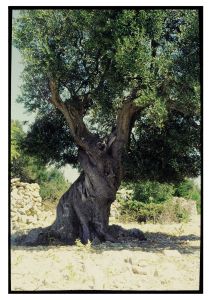
(2) Sovereign Self-Identification. Hearing their derisive reply (“Jesus of Nazareth“), He is not put off. “I am,” Jesus firmly answered — “ego emi” in Greek, the root meaning of the name LORD. At this, the formidable mob falls back, to the ground! Do you see this? If this Judas-led mob thought they were simply grabbing a troublesome young rabbi hiding in an olive grove at night, they were now sorely mistaken! His voice, that profession, His presence was awesome, if not fearful. They shrink back and cower. What would He say next?
 (3) His Sovereign Self-substitution. After confirming His identity a second time, Jesus directs them in their task: “I told you that I am he. So, if you seek me, let these men go.” For many months Jesus had set His face towards Jerusalem. He was heading into His cross. The Gospel of Mark provides Jesus’ explanation: “the Son of Man came not to be served but to serve, and to give his life as a ransom for many” (10:45). He offers Himself, and directs that His disciples be free to go. This was our Savior’s intention and work from the beginning: “Me for them.”
Amazing. Hail Jesus, the King of Gethsemane!
The second half of this conference message goes on to speak of the Lamb of Gethsemane. [more soon, DV].
~ pdb


 The Breadline