
Thinking, in order to love God more…

I’ve recently been immersed in the book THINK, The Life of the Mind and the Love of God, by John Piper (Crossway, 2010). It is hard to set down! He answers so many of my questions about reading, thinking and their role in loving and serving God. He does at times use those trademark (long) descriptive propositions, but carefully (and usually exegetically) presents each part of the proposition revealing the whole thing to be truly profound and helpful.
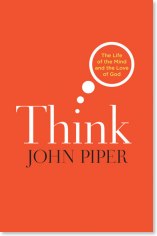
In this book, Piper suggests that loving God with the mind meansthat our thinking is wholly engaged to do all it can to awaken and express the heartfelt fullness of treasuring God above all things. (p. 19).

At the head of chapter one he quotes puritan Thomas Goodwin:

Indeed, thoughts and affections are sibi mutuo causae — the mutual causes of each other; “Whilst I mused, the fire burned” (Psalm 39:3); so that thoughts are the bellows that kindle and inflame affections; and then if they are inflamed, they cause thoughts to boil; therefore men newly converted to God, having new and strong affections, can with more pleasure think of God than any.

As he ends chapter two (on Jonathan Edwards’ contributions), Piper rightly observes, What an amazing example of ‘both-and’ — strong emotions for the glory of God based on clear biblical views of the truth of God. This is the very effect of Piper’s book on me so far.

It is a gourmet bit of writing, rich with biblical sweetness and much nutrition for the mind and soul. I’ll have to share more with you soon…

pdb

Love to the utmost

Puritan Matthew Mead presents glorious views of the love of God, which come with freshness and power to modern readers…

“Love is the most comfortable attribute in God, and the best name by which we know Him (1 Jn 4:16). Love acts with a priority to all other attributes. Wisdom plans the happiness for man, and power and providence bring it to pass, but love has the first hand in the work. It was love that first summoned the great counsel held by all three persons in Elohim before man or angels existed. Love marked the Son as the foundation of the whole structure of man’s salvation and blessedness. Love sent Christ into the world, put Him to death, and made Him an offering for sin. All the attributes of God act in the strength of love, and all the providences of God flow from the motions of love. Electing love is the proper source of all our other mercies (Eph. 1). He has chosen us before the foundations of the world, bestowed grace freely upon us, and has given us redemption through His blood. Paul lays all these blessings at the feet of electing love (verse 11). Love is the only attribute that God has acted out to the utmost. We have never seen the utmost of His power, but we have seen the utmost of His love. He has tabernacled divinity in flesh (1 Tim. 3:16). He has made His soul an offering for sin, and laid upon Him the iniquity of us all (Isa. 53:10-11). He has made us the righteousness of God in Him (1 Cor. 5:21); He has made us sit together in the heavenly places in Christ (Eph. 2:6), and written our names in heaven. How can divine love put forth any greater effort of love than this? It is infinite love and it gives the soul an interest in an infinite good. It entitles it to an infinite blessedness, and fills the soul with infinite satisfaction. Is not having an interest in this electing love the highest cause for rejoicing? Love gives us a ‘name in heaven’ which cause eternal rejoicing.”

— from Matthe Mead, A Name in Heaven (pp. 23-26)
as quoted in Voices From The Past (Banner of Truth, 2009), p. 278.